
倚天屠龙记马景涛版
New Zealand mayor's ‘China‑inspired’ solar project highlights potential for cooperation_我的网站

一 | (ECNS) -- The first phase of the middle route of China's South-to-North Water Diversion Project had transferred more than 80 billion cubic meters of water to northern China as of Friday, directly benefiting nearly 118 million people, according to the Changjiang Water Resources Commission. The water comes mainly from Danjiangkou Reservoir, where managers balance reservoir inflows, local demand in the Hanjiang River basin, northbound supplies, and downstream ecological needs. This summer, after forecasts pointed to below-normal rainfall, authorities adjusted reservoir operations to retain about 1.5 billion cubic meters more water as a buffer against possible drought. Technology is playing a growing role in monitoring water quality. An AI-powered floating platform works alongside satellites, drones, and ground monitoring stations, feeding data into a digital twin of Danjiangkou Reservoir that tracks water quality, simulates flood scenarios, and supports emergency planning. At Danjiangkou Reservoir, the core water source for the middle route, an autonomous vessel collects samples from different depths to monitor algae. Using AI-powered microscopy, the floating station identifies microorganisms quickly and tracks algal activity, giving early warning of blooms. The vessel is part of an integrated satellite, aerial, surface, and structural monitoring network that combines remote sensing, drones, ground-based stations, and sensors embedded in the dam. By fusing multi-source data in real time, the system has shifted water monitoring "from isolated points to full-area coverage," said Cui Dongdong, deputy director of the technology development department at a company under the Yangtze River Water Resources Commission of the Ministry of Water Resources. With the digital platform, a regulation plan that once took days to produce can now be generated in seconds. The platform runs more than 15 professional models covering flood routing, pollutant dispersion, and dam structure simulation. The 1,432-kilometer middle route canal carries water across the Yangtze, Huai, Yellow, and Hai river basins before it reaches households in the north. Water quality has also improved, and the nationally protected "crystal jellyfish," known as the "giant panda of the water," is now sighted frequently in the reservoir, an indicator of excellent conditions. (By Helen Mo, intern Yang Hongran) 
 。
。
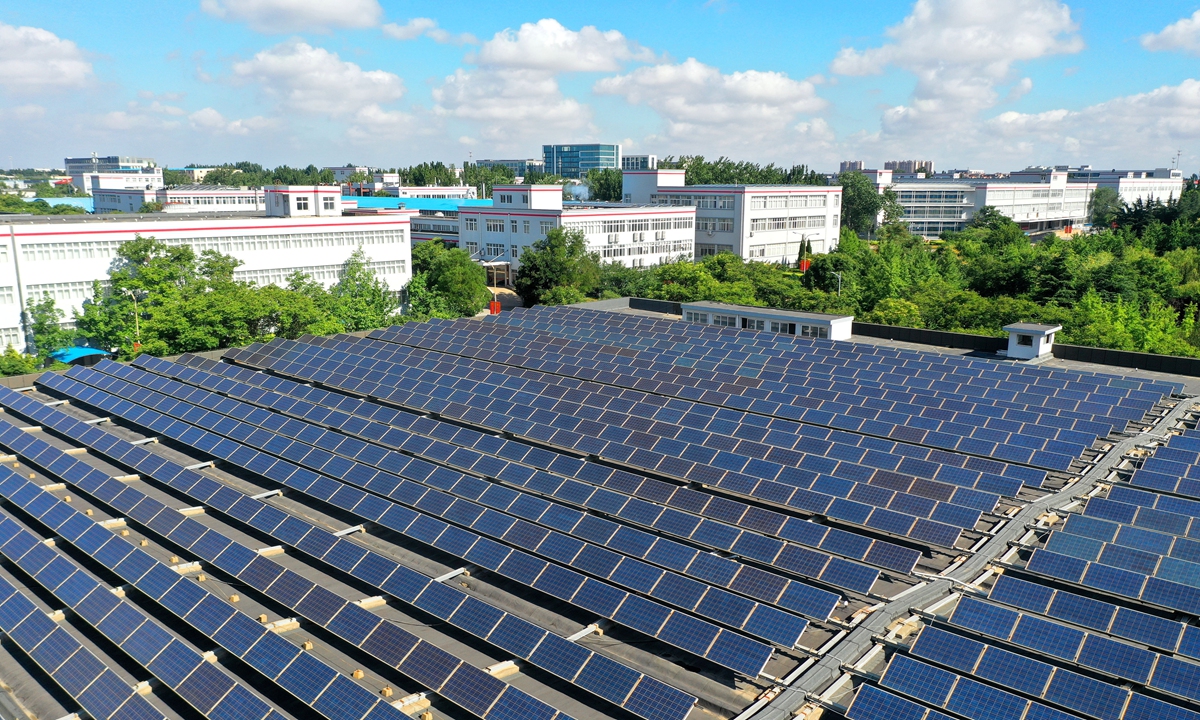
Some Western politicians have been smearing Chinese green products and even advocating for a "decoupling," but reality tells a different story. Recently, a mayor in New Zealand is reportedly pushing for a solar upgrade at energy-hungry public facilities after witnessing advanced green infrastructure during his China tour.
Christchurch Mayor Phil Mauger wants to turn some of the city's biggest power-hungry facilities into their own electricity generators, with a giant solar project at the wastewater treatment plant the first step in an ambitious plan inspired by a trip to China, the New Zealand Herald reported.
The mayor has ordered a report into whether solar panels could be suspended above the treatment plant in Bromley, creating a vast power-generating canopy capable of helping run one of the city's largest energy users. If successful, Mauger sees potential for similar installations at major facilities, where vast roofs and car parks could be harnessed to generate solar power.
Mauger's push for solar infrastructure was inspired by his recent visit to China, during which an innovative solar installation above a wastewater treatment plant caught his attention and sparked ideas for Christchurch, according to the New Zealand Herald.
Back in June, Mauger toured the wastewater treatment plant in Wuhan, Central China's Hubei Province, according to Hubei Daily. His itinerary included the central control station, solar-powered equipment room and sewage-treatment pools.
"What impressed us most were the solar panels mounted on the top, which supply electricity for the whole system. We have learned a great deal about its simple operation procedures and will hold relevant discussions afterwards," Mauger was quoted as saying in a local media report.
Chen Hong, a researcher at the Australian Studies Center at East China Normal University, told the Global Times on Wednesday Christchurch's planned project demonstrates that China-New Zealand cooperation can extend beyond conventional trade into city-level governance.
"Collaborative initiatives in clean-energy deployment, sewage treatment and waste disposal can create an innovative cooperation framework integrating technical solutions, engineering capacity and on-the-ground operational expertise," Chen said.
He added that this real-world case lays bare the fundamental divide between geopolitical narratives advocating so-called decoupling from China and the practical realities of local governance.
"If a Chinese solution actually works, ideological labels shouldn't get in the way. This case shows that the whole 'decoupling' talk is mostly political rhetoric. At the end of the day, economies run on cost, efficiency, and results," Chen said.
Global Times
。
Current article:http://he6.cengzaodengchawonin.cyou/roj3/ycctf.html
Published on:05:56:55


1
리벨리온, 영국에 AI랙 100대 이상 공급 추진…유럽 AI인프라 공략2
高温雨季来袭!福彩站点&彩票保管安全指南请收好3
当经典掀背车融入现代设计语言 斯柯达Favorit概念车发布4
香港机场飞机坠海事故更多细节披露5
新增吉尔吉斯斯坦、越南 中国240小时过境免签政策适用国家增至57国6
德罗赞助掘金冲击西部前六 预测概率升至86%7
如何看待以代表粉碎《联合国宪章》?联合国秘书长副发言人掏出一本新的:这种戏码看过太多了8
4预警齐发,中央气象台:今晚至明晚,浙江、福建、广东、广西、江西、湖南、贵州、云南、内蒙古、山西、河北、北京等地有大雨或暴雨9
上海发布 2026 版网约车行业自律公约:17 家平台集体签约,要求整治补贴冲单、低价倾销10
iPhone18ProMax手机壳曝光,边框进一步收窄,灵动岛尺寸缩减,深樱桃红新配色亮眼11
Vir Das turns wannabe spy in Aamir Khan–backed comedy Happy Patel: Khatarnak Jasoos12
政声直达|衡水湖观鸟成为京津冀暑期游的热门选择13
中国气象局进一步部署汛期气象服务工作14
龙港区消防救援大队开展消防安全知识培训暨逃生应急演练活动15
受“紫檀”影响 广西启动防汛防台风三级应急响应
- 随机推荐
1
富达回应“退出内地公募业务”传闻:目前没有任何需要汇报的变化2
致公党济南市第八次代表大会闭幕3
中埃空军联训万里畅通,中东“开绿灯”成亮点,兵器评论,原创 中埃空军联训万里畅通,中东“开绿灯”成亮点4
产业链公司业绩大增,机构:电解液后续仍存在涨价空间5
全国累计收购小麦超9000万吨6
水利部和中国气象局9月13日18时联合发布红色山洪灾害气象预警7
痛风糖果竟掺处方药废料,每盒成本仅7.48元,终端零售价卖到598元,涉事企业被罚没款3.8亿余元,责任人被追究刑事责任8
随着沃特森加入,骑士新赛季的首发5虎很强9
解码“杭州服务”一座服务业标杆城市的成长逻辑10
中国人民银行拟细化有关规定督促支付机构合规展业11
PM releases 12th instalment of Rs 16K cr under PM-KISAN through Direct Benefit Transfer12
一名男子遭恶性袭击,被抛下码头并按在水下,警方急寻目击者13
“电影+”消费推进会在榕召开14
希望暂时停催,一月一次性还本金15
歼-16对抗“阵风”,现场画面公布,光明网,歼-16对抗“阵风”,现场画面公布